I have had a Mirena for about 11 years now. And I didn't realize how much I owe to it until very recently.
I used to have terrible periods as a child, teen and young woman: every possible periods-horror story you can think of, I have had it- cycles that lasted over 25 days, immense cramps, major clots that would gush out of me with a torrent of blood, staining everything in its path including the jumbo pads, layers of undies, clothes and sweaters worn in an attempt towards discretion.
By the time I was 18, I basically could do no physical activities whatsoever- anything even slightly robust would bring on the dreaded bleeding. I once carried my niece on my lap for a few hours in a car while we were going somewhere, and knew, a couple of hours into the drive, that just that pressure against my uterus had started the bleeding again. I was anemic, had no muscles, couldn't be left alone because once the bleeding started, I couldn't do much (my mother accompanied me to my undergrad- she basically moved herself from Mumbai where my dad was, rented a house and refused to let me attend hostel, where there were 12 toilets for 200 girls.... my inability to stay in a hostel was a huge source of embarrassment for me and resentment against my mom throughout my college years), bunked several days of school and college, experienced severe and constant pain in legs, unending bloating etc etc. This was despite several cycles of hormone treatment.
I see these same symptoms in my daughter and I feel terrible for her. But I think treatments have improved over the years and I hope that she doesn't get affected by this too much (more than she already has, I mean).
Anyway, long story short- after my first kid was born, in my late twenties, I basically didn't have a period for more than a year. And when it restarted, it magically reset itself. For the first time, I had periods like any normal woman would: 4-5 days, a bit of pain and tiredness, but nothing like what it had been before.
And by the time my second was born, I was basically done with the whole reproduction thing. I had absolutely no desire to experience periods ever again. Started the Mirena, renewed it after 5 years and then we come to present day.
I had thought I had another year on the Mirena, but apparently I had gotten my dates wrong- I was off by an entire year. So, a few months ago, when I got my periods after nearly 11 years of blissful period-free life, I was a bit surprised, but didn't attribute it to the dwindling efficacy of the Mirena. It took me two months to figure it out: two months where my normal life slowly ground to a halt- I was bleeding every day again, couldn't go running (or walking or anything else) without bleeding, couldn't have a bathroom break without a little blood clot popping out, felt immensely tired and experienced a constant dull ache throughout my lower body all the time.
Finally went to the Gyn on Sat, told her the story, realized that the Mirena had actually expired several months ago (yikes!) and promptly got it replaced.
Fast forward three days: I went for my first run in a long time this morning. My energy levels are so high that I am still wide awake- more than 18 hours after waking up and having a full day of meetings and running around. No pain, no blood, no fatigue.
If this option had been there when I was in my teens or twenties, how might my life have been?
I might have been so much fitter! Still, better late than never!
No matter what, I need to ensure that D doesn't suffer and doesn't plan her entire life by what her menstrual cycles will allow.
Most of us think of medicines or fancy types of surgery or treatment when we think of medical miracles. For me, it is this IUD that has given me a life that I didn't even appreciate fully until it suddenly disappeared. My gratitude for it, and for the fact that it was so easily available and accessible to me to renew immediately, has no limits.

Wednesday, September 23, 2026


Wednesday, September 2, 2026
Nostalgic Pune
Which is a title a hundred times better than "Drowning in Tears Pune" which is what I probably could have called any blog I might have written during my first visit to Pune in 2018 after leaving it nearly 3 decades before.
In 2018, I had won my first grant. I had written it while my dad was in the hospital, pitched it a few days after he died, pitched it again a few days after my mom died and got word of the approval while waiting in the bank submitting his and her death certificates. As part of the "Welcome to the grant family!" process that large grant funders do for their awardees, they requested me to come to Pune for a day-long thing. I landed at the airport and decided to take advantage of the couple of hours in the early morning that I had, found a bus that took me to Aundh, where my mom and I lived after my dad got transferred to Mumbai, and tracked down that house. But I was an emotional mess and I couldn't handle the fact that they weren't around for me to call and let them know all the old places I could recognize in Pune and sobbed throughout the bus ride and the walk to the house. Received a lot of stares, but there are advantages to wearing glasses- you can hide your tears more easily than not.
But it is 2026. I am no longer that weepy mess. And I am back here in Pune for a 3 day conference. Which just so happens to be in a campus very close to that same Aundh house, so I decided that this time, I would try to track down the very first house that the 3 of us ever lived in in Pune. I could recall the names Shivajinagar and Model Colony, but try as I could, the rest of the address was a total blank. No recollection of the apartment name, or the road, but had full and intense clarity on how the road used to look, the sparrows that would chirrup, the green of the trees, the space in front where Appa first taught me how to ride a bike, and play badminton, and made me skip so I could become stronger; the little garden at the back where Amma helped me bury a sparrow and then her chicks after the former was killed flying into our hall fan and the latter starved to death (yeah, grim!), where we would pluck pomogranites and jamuns, where she found "thizhanellu" plant when I had jaundice, and the garage where the apartment ppl would keep a Ganapathi and sing songs during Ganesh Chaturthi. That house. But what was it called? Where was it?
Then in a massive stroke of luck, I found Vaibhav Sweets on the map! Vaibhav Sweets! The place outside which I would stand every day for my school bus and where I first discovered that male and female sparrows look different! Surely it couldn't be the same! But Google pics assured me that it was- the same bright red lights, the same fonts. So I found my way to Vaibhav Sweets and then to the apartment.


The slums opposite the apartment no longer exist, although it is still clearly a lower socioeconomic neighborhood than the earlier part of the road. Sheetal Apartments (I do NOT recall it being Sheeldutt Apts, frankly...) looks a bit tired. Maybe its charms were invisble to me in the fading twilight and yellow street lamps. The wooden board inside with all the names of the owners is the same that hung there in the 1990s with the exact same names... did nobody sell their unit or move out, or has that wooden board become so much a part of the collective consciousness that nobody has thought to replace or update it? Surely there must have been deaths, weddings, births and movements of families... The garden inside has been paved over - no more pomogranate or jamun or thizhanellus from there. I was too jittery to wait for someone to come and ask me what I was doing there, nor did I feel that, if asked, I could conceivably tell people the reason why I came all the way just to see it again.
I then went on the road that led to my Marathi tuition teacher- a big part of my life in that era. For three years, from the time we moved to Pune, I went to Smita aunty's house nearly every single day trying to learn a new language from scratch so that I could survive school and Puneri life, where everyone spoke (and still speaks) only Marathi. Smita aunty, as a newly wed, had come to live with her husband and his elderly mother in a small house with a very large garden and an outbuilding that served as her husband's printing shop. He would print business cards and the like, and set them out to dry one by one before packing them up neatly in little boxes. That outbuilding used to be a place of magic for me- the walk through damp earth and little tiles laid out in a path, the smell of ink, the stacks of empty cards waiting like so much possibility, and then, after being inked, shipped off to all sorts of places in the city and into unknown hands across the globe. Their sight would fill me with yearning- I desperately wanted to work in a place like that. I felt that there could be no higher purpose than being able to print whatever you wanted in your own home. Smita was a lab tech and a painter. She ran biochemistry tests in a hospital called Ratna Memorial, where my mom, a few years later, had a pretty major surgery to remove a tennis ball-sized lump from the side of her spine, the visible sign of her struggle with bone TB. I wonder if Smita recognized my mom's name when her blood tube must have showed up at her lab for pre-op and post-op tests. Never thought about asking her this at the time, of course. Smita's mother-in-law was a Marathi-version of my grandmother. Widowed at an early age, conservative, would wash her own clothes and set them out to dry by hoisting them on a high clothesline inside the house and when dry, would use a stick to move them down to a clean area, untouched by human hands so that it would remain "pure", fluent in multiple languages and possessed of an acerbic sort of humour. She was an avid gardener and it was there in her beautiful, tree-laden, damp garden that I first saw lemons growing on a shrub and have longed to grow in my home ever since (now I have a lemon shrub, but it is, alas, only filled with thorns and has stubbornly refused to fruit, despite using my Ajji's trick of threatening to cut it) I used to feel very close to the elderly lady, of whose name I have no recollection now. I don't recall the husband's name either, for all the hours I spent in their house.
The small house with the large garden no longer exists- it seems to have been converted into a set of flats. But what was astonishing to me was that behind the flat was a garden with an outbuilding! Did Smita and her husband decide to hold on to that space after all? And if so, why? Did he still work out of that space? When did the elderly lady pass away and how?
I wasn't prepared to stick around and ask questions, especially because I don't know any names. How would I even ask and whom would I ask...but more importantly, what would I do with any of this information? It's so random, and kind of pointless, no? It's not like I want to get back in touch with any of them. Is merely satisfying one's curiosity enough to go through the trouble of finding someone to talk to and rehashing all the old times?
Anyway, two points of intrigue: there used to be a small boy, a 6 year old, who had lost his father in a road traffic accident (even in those days!) on the highway between Pune and Mumbai. His father had been a dentist, I think. This kid used to come in my school bus and lived fairly close to Smita's house. The entrance to the road leading to Smita's house now has a large sign board that says Kale Dentistry.... I wonder if it is this kid!
And the second: there used to be a slightly smirky, "cool" kid calle Gaurav Mulchandani- again, living somewhere on or around that road. And there is now a sweet shop (almost exactly opp Vaibhav Sweets) called Mulchand Sweets! Did Smirky Gaurav get into the sweets business? So many points of eyebrow-raising worth!
These are the things I wish I could speak to my parents about. Who else would get any of this adventure? My mom would have totally gotten my need to revisit, we would have gossiped nicely ont the phone and she would have been a fellow detective on my path to discovering the old apartment complex. I think she would have also probably had the courage to go speak to some of the people.
My dad would have remembered names and faces and stories- it wouldn't have been half-baked knowledge like mine. He would have known exactly where I had to go and how. And would have encouraged me to find my way to my old school too.
Being an only child has its pros and cons. But I think the loneliest bits about being one is the fact that once your parents are no longer around, you don't have anyone to share your childhood memories with. And childhood memories are intense and vibrant and matter a lot.
Sunday, August 9, 2026
Learning my kids anew
I assumed, before RK left for Australia, that my life here in Blr would be just the same as ever: me and the kids doing our own things, me supporting them when they asked, packing them food and hanging around. I hadn't really given it much thought.
Adolescence, in many ways I'm realising, is like very early childhood- the kids grow so fast that you blink and you miss it.
What I hadn't anticipated was that if I didn't put in some effort, we were at risk of becoming three rather detached roommates and nothing more. It struck me recently that it had been a few days since I had a proper conversation with Ani, for instance, and that the sum of our interactions was limited to mundane practicalities- money for the bus, wishing each other a good day, texts about the house key etc.
While Durga still seeks me out to tell me about her day or share gossip (or tea,as she calls it) or company to go window-shopping, Ani's interests and mine appear to diverge so much that these long spaces occur without even my realising it.
Then there are feelings of loneliness - I miss RK and the laughter and fights we have. I miss how naturally the household comes together when he is around. But I always assumed it was a me- problem, that I had to resolve this within myself.
Then there are the fights that Durga and I are having- she's at the phase where everything I do is wrong, boring and lame. Her greatest pleasure is to make fun of me about everything, especially to other family members. Which is entertaining, no doubt, but can sting.
Today, after reading "The Seven Husbands of Evelyn Hugo" I decided I needed to spend time with both the kids. I called them out of their rooms, and said we needed to hang out together. Conversation was initially a bit stilted until the topic of weekday lunches came about at which point, it was a lot of laughter and teasing by the kids about my cooking. After that, it was fairly smooth sailing. I excused myself when it turned to "Summer I Turned Pretty" which Durga likes, I loathe and Ani finds so hilariously bad (he claims) that he and his college friends watch it together and text about how bad it is (or they could be gushing about it, who knows!).
Now I go to bed feeling happier than I have been these past few days. I was walling myself up thinking I had to figure out how to navigate all this stuff by myself. Maybe the answer is as simple as reaching out to the people who matter the most and creating occasions for us to come together. Memorable family interactions don't just have to happen when all 4 of us are together; maybe we can create routines for us three as well and not feel like we are just in a holding pattern until RK returns. Maybe I could embrace this opportunity to not feel like I am just a placeholder for the double-parental unit.
Monday, August 3, 2026
The Killing of the Shrew
A tiny shrew entered my bedroom today.
Random rodents keep entering our house. We are the only house on the whole street who have a tree and space for the Earth around the tree. We also compost around the tree. And to cap it all off, our dog Perry likes us to keep the door open so she can keep running out and barking at various things. Needless to say, lizards, rats, mice and on one memorable occasion, a squirrel have come in. It's especially bad after harvesting the mangoes- the smell of mangoes in the verandah room is heavenly and serves as a beacon to many many creatures in addition to humans.
I can handle lizards and feel reasonably comfortable guiding them out. I am intensely scared of rats and mice. Once a rat entered our house, climbed the stairs (!) and entered Ani's room upstairs, hung out there all day, emerged in the night and jumped on his bed and bit him on its way elsewhere. We had to go to the emergency room for tetatus shots at 3am. Our househelp Shanthi is very brave and if I have sequestered the rodential intruder in the verandah or the room attached to it, she strides in and pushes them out.
If Perry gets a scent of any of these rodents, she kills them. So, Perry is like a brahmastra- you only bring her in as a last resort and you can expect destruction. Bedroom rat, for example- instant death.
Today I wasn't sure what had entered, but the squeaking sounded like a rat. Durga shut the bedroom door so the rodent couldn't escape. All my clothes cupboard doors had been open and I was dreading going there tomorrow morning to see rat-shit everywhere on my clothes. It was really stressful and I felt very out of control. In fact, while I have managed reasonably well without RK these past few months, this was one of the times I desperately missed him. He would have understood my utter reluctance to enter the room or deal with this problem by myself and would have done something about it (as he has before). He would have made a nice joke, turned it into a learning lesson for the kids.... basically, he would have handled it really well. Unlike me. This is what I did:
I dithered a good bit, messaged some loud messages on Whatsapp to RK and then we let Perry into the room. We could tell that Perry had caught the scent and then on the other side of the door, heard several very loud shrieks and then silence. I gently opened the door and caught sight of a much smaller grey body than I was expecting.
I yelled to the kids (kids are even more scared than I am... I asked Ani to help since he's the man of the house now and had to listen to Durga retorting about patriarchy and Ani informing me that I was the adult here) and then they peeked in and Durga said, I think it's a shrew.

Look at it... it's so cute... it is supposed to feed on insects, worms and spiders. No wonder it was hanging out in my garden. Why, oh why, did it have to come inside the house?
I am swamped with guilt. Also nausea. I wish to God I had done something different.
Tuesday, June 9, 2026
Panel Discussions
What is the point of a panel discussion?
It's like an anthology- it gives you a teaser, a brain worm, or provides enough intrigue for you to search out the author/speaker and learn more about their work.
In a lot of conferences, talks and symposia today, I find that either:
a) the organisers didn't want to seem like they are playing favorites.
b) They are absolutely playing favorites and want everyone to know it (and the fact that they are all a little circle of friends)
c) the topic is so complex or polarising that the organisers would like to aggressively moderate the speakers and the audience.
When should a panel discussion format be used?
a) When the topic is sufficiently novel for a vast majority of the audience b) When you want to offer mid-level professionals a chance to speak about their work (sort of like a "watch this space" prelude to hopefully more impactful work) c) When there are so many opposing sides that you don't want to give any particular side too much time or space (in a dream world. In reality, there will always be one side that figures out how to rig the system so that their POV gets prime time) d) When you want to introduce a piece of work or even a particular emerging field- a book, a highly relevant article, some aspect of computer security or immune cells or road building materials etc. e) When there are broad nuances that the organizers or speakers want to highlight but these are not too technical or detailed for most people to miss.
When should a panel discussion format NOT be used?
a) When the topic is sufficiently personal to everyone- even if they don't know the nitty gritties of it, they all have experience of it. In such a case, it's far better to either have an extended the Q & A session, or even better, have a series of short talks by the panelists with a Q & A at the end of each session and ideally, also provide Q & A time at the end of all talks. Otherwise, the entire panel risks being dismissed for being underwhelming, not actually understanding the nuances of the topic, or the personal lived experience of individuals, or worse. If people are coming to a venue specifically for a session- why design it for a miniscule 1h or 90m? By the time the intros are done (don't even get me started on panel discussions that have an inauguration first... why??!) and the initial mildly funny opening remarks are over, you have already lost 20 minutes. Then invariably the first speaker takes up way too much time and the last speaker has to speak very fast to cover all their key points. And then the organizers claim they will take "only two questions please, in the interests of time". Can there be a more irritating format?
b) When the audience knows the topic... one can claim that in today's age of complexity, nobody knows every perspective. Ok, fair point. But when the audience are those you have invited specifically because of their experience or interest in something or the other, why would you then assume they don't have a depth of understanding to catch up fairly fast? Then of course, EVERYone has opinions that they would like to share. A well-planned panel discussion format might actually work pretty fine here, but nothing irritates or frustrates people as when they either haven't been allowed to dig deeper into something or share something of importance to them.
Sunday, May 10, 2026
Graduating from some Tropes
In the history of romance novels, a wildly successful trope that has lasted for several decades is the one with the well-meaning but generally incompetent heroine.
There are several excuses- she's having a bad day; she's nervous, distracted, overwhelmed, underwhelmed, bored etc. So she leaves important documents on the train, drops her handbag, forgets her wallet and her phone and her charger and her car keys (like, seriously... what exactly did she remember to take in her large handbag?).
She has no freaking clue how to be patient, how to maybe think a little bit before shooting her mouth off in public, how to be a bit attuned to the general vibes in a place... so she says stupid things which are overheard by the wrong people and then she has to run around apologizing to them and so on and so forth.
You get the pic.
Anyway, I am now done with this trope. I have decided, no more books with the dumb heroine.. If I need to teach you to be a bit careful about your stuff, lady, then I don't need to be reading about your lovelife- it has nothing to offer me.
I wonder if I will, as I age, start shedding annoying tropes. Maybe when I am a wise old eighty year old, I will only be reading very specific books- maybe they will be competent, older women who can take care of themselves. Maybe it will be about couples who can communicate honestly without mumming up
Monday, April 27, 2026
Fear
Jiddu Krishnamurthy says that there are really only two emotions in the Universe: Love and Fear.
When I first read that, I scoffed. What about the 87 different emotions painstakingly laid out in great detail in the Atlas of the Heart by Brene Brown, Mr. Krishnamurthy, I thought. That book makes perfect sense to me!
Over the past few years, I have had the opportunity to dig deep into myself and ask where are many of my negative emotions coming from. I have felt feelings of deep insecurity, FOMO, anger, resentment, betrayal, bitterness, hurt, and just plain and pure fear.
Digging deeper is not easy. My throat catches, my breath stills, emotions beat against my brain like a never-ending tide, red-hot anger sweeps over me, and drowning in all these emotions is far, far easier- I willingly swim deeper inside a vortex of negativity with each thought and dwell where all my actions have unbeatable justifications, there is no possibility of any blame coming to me, and I feel only blemishless, pure, untainted victimhood. Climbing out of the vortex requires first and foremost a stilling of the brain. For me, this is only possible when I write. Yogis and mahayogis describe the use of breath in stilling the brain- this hasn't worked too much for me before. My monkey brain leaps too fast for me to catch hold of my breath. Writing, on the other hand, forces the monkey brain to slow down for my hands to catch up to my head and that slowing down then helps my breath to take over.
Digging deeper requires the willingness to change. I know several people who refuse, who cannot imagine that there could ever be a different perspective and are afraid of being "proved" wrong- who are so attached to their truth because to be otherwise means that they might have been wrong about other things before and that can shatter the edifice of their life.
Digging deeper requires me to forgive myself. This has taken time. I have realized that if I cannot believe that there is forgiveness to be had, there is no way I can acknowledge my mistakes. So I will always be in a state of denial and more importantly, in a state of fear that my mistakes will be found out. To be able to forgive myself is to be kind to myself. I have heard all my life that I should be kind to others. I had never realized that showing kindness to myself is extremely hard. I think women especially are taught not to be kind to themselves- it is some sort of badge of honour to show that you treat yourself like shit: the last to eat, the person who wakes up first and goes to bed last, the person who doesn't take a break, the person who needs to be everywhere, doing everything, all the time, every time. Just like charity, kindness begins at home- if you can't be kind to yourself, you can't be kind to your kids or to anyone else.
Digging deeper requires me not to accept platitudes: Easy answers are fairly quick to come to mind. They also push the onus away from me and on to some external factor which is out of my control.
Digging deeper requires me to work through the signs of my body panicking- this is the sign that I am truly reaching the truth. When my heart starts beating faster, my eyes tear up and breaths start coming in gasps. This is the sign that what is true is actually deeply frightening. What started as anger, bitterness, resentment, betrayal, jealousy, envy and any number of negative emotions is actually deeply rooted in fear.
For me, fear of abandonment is the deepest fear of all. It manifests itself in various types of ways, it comes up in several avatars and underlies nearly every strong negative emotion I feel. It doesn't have to be abandonment by a particular person/s: it could be society (whatever way I define it in whatever situation). Fear of abandoment also shows up as fear of not having a legacy, fear of missing out, fear of being forgotten, fear of being passed over, fear of not-counting.
So, J Krishnamurthy was right: Fear is a root emotion of everything negative. By the reverse logic, I suppose love is the root emotion of everything positive. Love for a person, community, land, memory, things makes us feel all the positive emotions Brene Brown lists.
Today morning, I had a moment of visceral negative emotion. A group that I work with closely didn't include me in a research project in a field that I have been working in for a few years. I was upset last night going to bed when I found out, and I woke up upset. When describing this to RK, my voice broke, tears welled and I sobbed.... all the while thinking, why in the world am I so upset? Surely, this is not anything to get so carried away by!
Then I realized the reason- It is intimately connected to what I am considering doing next in my life: Here I am, thinking about doing a midwifery degree, which, from all descriptions, looks like it will be an intense study of 4-5 years. I am struggling with fears of losing out, of having these past years of work be forgotten and my contributions overlooked. I am worried that life is a zero-sum game: that if I gain something new, I will need to lose something else. My fears of abandonment manifested as feelings of betrayal and anger against a completely different object because of this context and what might have been a pinch instead became a gigantic ball of hurt.
So, this is a breakthrough: if I am feeling such intense feelings of fear about midwifery, and the journey it will take me on, clearly there is something here that bears further examination, of myself, of my perceived place in society, of my perceived role and stage of life.
On one hand, is familiarity, things that I have built by myself and where I am beginning to do some great work. But on the other hand, is a growing boredom. I have to admit that my brain is built for taking on the challenge (and stress) of novelty. Once I figure out something, I don't take a lot of time to do it and then I back to square one, wondering what to do with my time. My training and default avatar of a researcher also means that a lot of my work is mental. I feel the need to work with my hands... and not in a lab either. Logically, and heart wise, I feel ready to take on this new direction. But fears lie much deeper than logic or even desire. Fears stem from the lizard brain, the primordial part of us, where our basest nature lies. Fear can only be conquered by acceptance and love. I accept that I am afraid, that I fear oblivion, that I won't be seen as "serious" or "committed" to my current, socially acceptable, comfortable, settled way of life. I also probably will get lots of questions from various people about why I want to do what I intend to do. I myself no doubt will question my own sanity several times. And I will be starting from scratch- for the 5th time in my life: the first time didn't count as I was just starting my adult life in my 20s and decided to study Virology without having any idea about what it was; the second time was after we came back to India and I started work as a childbirth educator; the third time was when I decided to start a business; the fourth time was when I started work as a diagnostician in probably the most challenging period possible- during the Covid pandemic.
So, if this is my 5th time in 44 years, then I am averaging one identity-shift every 8-9 years. Really, by now, it's par for the course for me to reinvent myself every few years, it's actually become the norm.
But as I grow older, reinvention feels scarier... am I being biased by sunk cost? am I just tired of starting from scratch? Am I really starting from scratch though? If I am being honest, I have been working in public health as a diagnostician and will begin working in public health as a nurse/midwife. So, actually, one might say, I am actually deeply committed and serious about the same field.
Anyway, enough placating. And enough reflecting for now. No doubt the days ahead will bring further emotional upheavals. The main thing to know is that fear is a constant and I welcome it as a friend. Only then can I hope to understand it and transcend it.
Sunday, April 19, 2026
Striding Forth (Cautiously) Towards a New Phase in Life
These past 10 years (no wait.. ELEVEN!! Mind-boggling!) in India have revealed aspects of myself that I neither knew nor would have bothered to find out had I stayed on in the US. India has a way of ripping apart facades (and like every other place, putting in new ones). I have learned that I need to keep learning new things, doing things with my own hands, and occasionally feeling fear and feeling like I have triumphed over fear, to keep myself engaged and energized. Otherwise, I drift into ennuii and existential crises and have terrible moodiness. I also start devouring books without rhyme or reason, mostly to keep thoughts at bay and to fill up time.
I have felt ennuii multiple times, but more so over the past year. This happens more frequently as I become more efficient- by delegating, mentoring, putting systems in place and sometimes, plain disappearing, my various projects start running by themselves and junior people grow, start taking on more responsibilities and life becomes smoother.
Age and experience have also taught me to be less tightly wound and more philosophical about occasional perceived slowness of pace, retreats, and backfoots.
With all this knowledge and wisdom, the amount of time I have on my hands is increasing, which means I am getting awfully bored and feeling very directionless. But how to articulate this? For months I was irritated with myself- how ungrateful, how dissatisfied and how unaware of my own privilege was I acting by feeling like I didn't have enough, when I actually have so much? What right do I have to feel stressed when I have nothing concrete to feel stressed about? I am at a stage where my kids are on the brink of independence- I should be focussing on enabling that, not wallowing in some inexplicable, nebulous fugue state.
Over the past two weeks of staying in rural Australia, I have been able to get to a point where I can articulate this better. Where I realize that the lack in my life is not something concrete but internal. That I need new challenges and new directions. The old ones are familiar and while there may be occasional hiccups, they feel like roads already traveled.
This is why I am re-looking with new eyes at an old desire: to study to become a midwife. I had thought about this intensely while leaving the US for India. The timing was just never right. Now, as the kids grow up, and my interest in primary care practice increases (along with experience), I am drawn to the idea once more. I could probably also get into medical school- either in India or abroad- but not sure why I would want to. I mean, I already have a doctorate. I also have mixed feelings about the attitudes taught to medical students regardless of country (this is certainly true in India, somewhat true in the US. Not sure how it is in Australia or other parts of the world): one of condescending superiority. As a non-medical person working in the health field, I come across this often. I deal with it when personally experiencing it by batting my PhD back at them. But I have observed this in shocking ways in India with others and cringe from it.
The midwifery idea is more congruent with my own personal philosophy- support, hands-on work, giving space for another's personal preferences, valuing another's mindset and personal values, compassion, and quiet action. My life right now has a lot of the so-called "higher order" activities- leadership, management, mentoring, organization-building, systems-thinking. What I lack is higher order embodiment- using my hands and mind to actively do and improve.
What I hope to gain from completing such a course of study is access to serve in rural clinics in India and abroad. To be able to run a practice and touch someone's life for the better. To use all my learnings in building an organization and managing it, to think critically, to innovate locally and rapidly, to be nimble and flexible in operations, to grow local talent and instill leadership in young people, but in this new setting and role.
In India, the course is a combined one in Nursing and Midwifery. However, I do not like the servile attitude taught to nurses in these programs. Nurses are taught to be subservient to doctors, to have their innate leadership abilities tamped down initially and then ostentatiously and artificially "built up" through nurse leadership programs. I could be wrong, but this is my impression of it. There are also strong caste and religion- ties to nursing as a profession. I am not sure if I want to wade into these murky waters. Some of this subservience is also present in the American landscapes.
The courses in Australia and New Zealand seem much more straight-forward, "clean" in their attitudes and nurses do not act servile or subservient- they consider themselves equal to doctors. This allows for fantastic community-oriented programs run and managed by nurses and tremendous opportunities for growth in rural programs.
I also have considered if I should do only a midwifery course or a combined nursing and midwifery course. The latter seems better for future work in rural primary care. However, the combined programs are also 4 years long, compared to 2 or 3 year midwifery specific programs. I am 44 years old now. I would ideally like to start practicing before I am 50!! There are conversion pathways in Australia and NZ for registered midwifes to become nurses. I need to understand better if becoming and practising as a midwife first for a few years before becoming a nurse is better or just getting both done at the same time is better.
I also should find out how to leverage all my learnings thus far into this next phase- surely my experience and talents should atleast be able to get me some sort of scholarship or assistance in the coursework and later.
All this thinking reminds me that the best research into a new phase of life is actually conversation and discussion. Maybe in the next two weeks, before returning to India, I should reach out to some people and talk to them about all this.
Thankfully, RK is as supportive as he has always been throughout our lives together, not to mention perceptive and clear-thinking. I can't help feeling that my parents would also approve of this (while being a bit bewildered as to why, perhaps... but understanding the motivation and desire, nonetheless). As for my kids, I hope what they learn from these attempts is to be open to reinvention. Freedom of thinking is the greatest asset anyone can have ("emancipate yourselves from mental slavery, none but ourselves can free our minds", as Bob Marley says) and I hope they actively pursue the same in their own lives.
Wednesday, March 25, 2026
Grappling with the Cryptic .... initially... and then ending with something else altogether.
My dad used to be a big fan of the Cryptic crossword. My cousin Sinduja had learned how to crack them- she had picked up the skill from watching a number of her aunts and uncles, including Appa, and would somehow effortlessly crack The Hindu, the Economic Times, and the NYT crosswords.
Not so me- I couldn't figure out how any of these people would know just which words to unscramble or synonimize or chop off. So I stuck to the Quick.
After following Cracking the Cryptic since the days of Covid (which has all sorts of puzzles, not just Sudoku), I started becoming a little more open to the idea of using more than just vocabulary to solve a crossword. I tried my hand at the Deccan Herald cryptic, staring at the previous day's puzzle with the next day's answers, only to be absolutely stymied at the logic behind it.
But since I am a Guardian fiend, I found the crossword blog. It began to give me a glimpse of how cryptic crossworders think. The Guardian also has a Quick-Cryptic crossword for noobs like me and little clues on which specific tricks to use with a handy tool for reminding one what each name stands for and examples of each trick- clearly I am not the only one who can't keep things straight in her head.
So, over the past few weeks, I have been slowly wrapping my head around the Quick Cryptic. It makes me feel incredibly good about myself. I almost feel like I could be one of those codebreakers at Bletchley. It also makes me wish I could turn the laptop to my dad and preen a bit or solve it with him.
Once I feel a bit more confident with Quick Cryptic, I shall try the DH Cryptic again.. who knows? Perhaps I will slowly be able to get myself upto a proper Cryptic by the end of the year! Also, since the Algorithms Lords on my phone news feed only seem to be giving me info on how quickly brains deteriorate after one hits 40, maybe this new hobby will help me keep hold of the few cells left in the old nut.
The benefits of the Cryptic crossword might overcome the mushiness caused by age and C dramas (only one at this time): Pursuit of Jade, I love you! Do not, I beg you, be put off by the Netflix blurb... she is neither humble nor is he disgraced. The blurb is all wrong. It is probably the BEST adventure-comedy-slow burn romance I have seen in years :) After bingewatching 12 episodes in 1 night, I woke up to the sound of the vegetable seller yelling "tarkari tarkari" in Kannada, and I was like, this is the wrong language. I only chose it because of the exquisiteness of this painting on the Netflix icon:

Otherwise, I loathe the cutesy faces, the lipstick and the flying martial arts. But this picture enraptured me and I am glad of it. And also that this show doesn't have the flying martial stuff or the cutesy faces.... unfortunately, lipstick on men seems to be a given for all Asian shows. But Chinese actors are significantly more handsome than the guys on Indian shows on Netflix.
Monday, November 17, 2025
My first review as a fine arts critic!
I was very pleasantly surprised when I was requested to write a critique of a dance event in Thrissur. I have been watching and being more and more deeply interested in traditional dance forms since Durga started learning. I do not dance myself and know no theoretical background to anything I watch. But I like watching and thinking about what I watch and my general garrulity ensures that I gush loudly about a performance that moves me. I guess someone must have noted this and thought of asking me to write something.
This is what I have penned and it will hopefully get published in Narthaki, an online magazine for South Indian dancers.
Wednesday, July 2, 2025
What kind of a public health person am I?
As I become a little more familiar with the public health ecosystem of India, I am slowly beginning to feel less like a visitor to this field and more aware of the players and the dynamics... it's like getting to know your husband's family after your marriage. Everyone appears amazing and will go to great extents to tell you how close they are to your husband when you first get married, but as you become more and more integrated within your partner's family, you understand history, nuances, dynamics that were glossed over before.
The main organization I have worked with and understood a little bit about public health is an old one based in B'lore with whom I became close during Covid. Recent experiences with scholarly writing and with consulting for some other public health organisations makes me realise that not all PH organisations are painted from the same brush, even if nearly all have very similar-sounding mission/vision/goal statements.
Some follow the consultant-model. I think this is the type of job what most new graduates from fancy PH schools assume they want. This model has some degree of field work, but does not involve much actual ground-level implementation. The meetings will be with heads of other bodies, may include a day or two observing the implementers and the work will involve a lot of writing, calling, meetings, reporting, coordinating and organising. For young PH professionals, their identity is not with the work or with building their own brand as much as it is with the organization they have joined. This is different from the PhD style training I am more familiar with. In the PhD route, at least in the US, students are drilled that they are working for themselves, by themselves and towards building a personal cachet. This, of course, has its own drawbacks mainly that most PhD graduates are not organization builders. They plug into existing organisations, such as universities, and are focussed on personal advancement.
Some PH graduates follow the ground-level management group. These ones tend to be managers of the implementers- they end up being program leads or program managers. They work closely with the implementers but ultimately their day to day lives are similar to the first group's but with a slightly different weightage to the activities. I think that most of their lives are spent chiefly coordinating and organising and then reporting, writing etc. They also sometimes show up in public sector PH projects for leading teams of young researchers for ground-level data collection, household surveys, and the like.
People from both categories tend to move from project-to-project or site-to-site as projects end. So it can be a life with quite a lot of unpredictability or changing jobs or movement.
Very few PH graduates actually end up as ground-level implementers. From what I have seen thus far, implementers tend to be professionals from healthcare, law, social welfare etc. They may have systems on the ground and they bring on PH graduates to help manage things better, conduct certain types of research, assess quality, monitor/evaluate progress etc. I think for the implementers, public health is of course one of their objectives, but it may not be necessarily the most key one. Their core objectives may be far more narrowly focussed, such as providing some kind of service to some kind of community. This also means that they stay put in that community for a long time.
The people who choose these different categories also tend to be of different socio-economic strata.
This categorisation helped me understand where I fit in in the PH field: I identify myself first and foremost as an implementer. And maybe a little bit as an observer and scholar. And that's why even though a lot of the work I do these days is actively public health related, I do not intuitively understand the new PH graduate life or their challenges or mandates or priorities. With more thought, curiosity and discussion, the above categories can be honed and polished and I can be better prepared to understand and anticipate the flow and nature of various interactions in this field.
Time loops, age and love
What might have my parents been doing at my age?
My mom, I think, had her bone TB diagnosis when she was 43... so she must have been worried about dying. This was in Pune.
My dad at 43 must have been quite excited about his work in Chennai..I don't think we had moved to Pune yet. In Chennai, he had been the Chief Manager or a Branch Manager, I forget which one. He was ambitious and had still a strong sense of his physical appearance- I recall he would exercise every morning and that I would join him for curl ups and jumping around the house.
I thought about this today because I realised many of my clearest memories of my mom were from when she was younger than I am now. So there is a juxtaposition of feelings- my old ones when she was the all-knowing, wise, kind person who could always make me feel better and my newer ones when I look back and feel warmth towards a younger mother likely juggling many different things.
All these thoughts emerged from the recent stay of my mother's younger sister from the US and her daughter, my cousin, and her family of husband and 3 year old daughter. And I experienced the same feeling of warmth and confidence that things would be ok when my aunt was around that I did with my mom and dad, while also watching her take care of her daughter and granddaughter. They had brought a lot of old pics with them; we spoke about earlier trips and visits; we spoke of me and my cousin when we were younger (same age as my kids now, actually!) and of my mom and aunt as children and teens.
So I am in this time loop and wondering at it. Will my kids and their cousins have warm memories of me and my cousins now? Will my kids remember me as someone kind and loving or someone harried and irritable? Will my nieces reach out to me for support and help as I reach out to so many of my aunts and uncles for various types of advice, guidance and comfort, or receive the same even when I don't realise I need these?
I realise that all these are possible only when intention, planning, time and effort go into building these relationships and connections. It is easier for me living in Bangalore to do this with my extended family here. But I do wonder how to reach out to those who are not in Bangalore.
I am so grateful to my cousin and aunt for having coming all the way here and deciding to stay with me, when no doubt there might have been more comfortable abodes they could have chosen from. These are the connections that both my kids and hopefully hers will recall with trust and love when they are my age.
Thursday, May 8, 2025
Turahalli Tree Park
Is the name of the place I decided to go birding at today. It took about 35m by metro and then another 25 mins of walking.
I have been using eBird as a way to keep track of my lists, but I miss my older posts with the pics and the names. I also think the blog is a better way to keep learning so I'll do both. Here's my eBird list.
Some of the birds of note I saw today were:
 |
| The Asian tit or Cinereous tit- spotted it on a roadside shrub on the way to the park. Image from eBird |
The Cinereous tit is such a beauty- it's striking, it's small and energetic, and is almost as common as a sparrow in some parts... alas for B'lore city, we have neither anymore.
 |
| The spot-breasted fantail... don't you love names that describe the thing perfectly! |
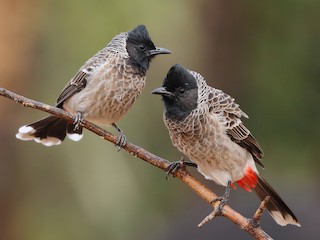
The bulbuls :
 |
| Red whiskered |
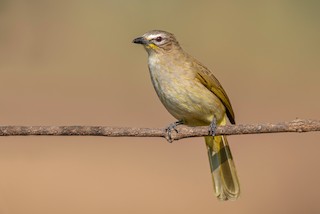 |
| White browed |
 |
| Red vented |
There is a bird called the Ashy prinia which I adore- it's noisy, it doesn't give a crap and it's beauty is very subtle- outwardly boring, but in the right light, the way the light catches on the ashy blue and the brown and the pale orange is stunning
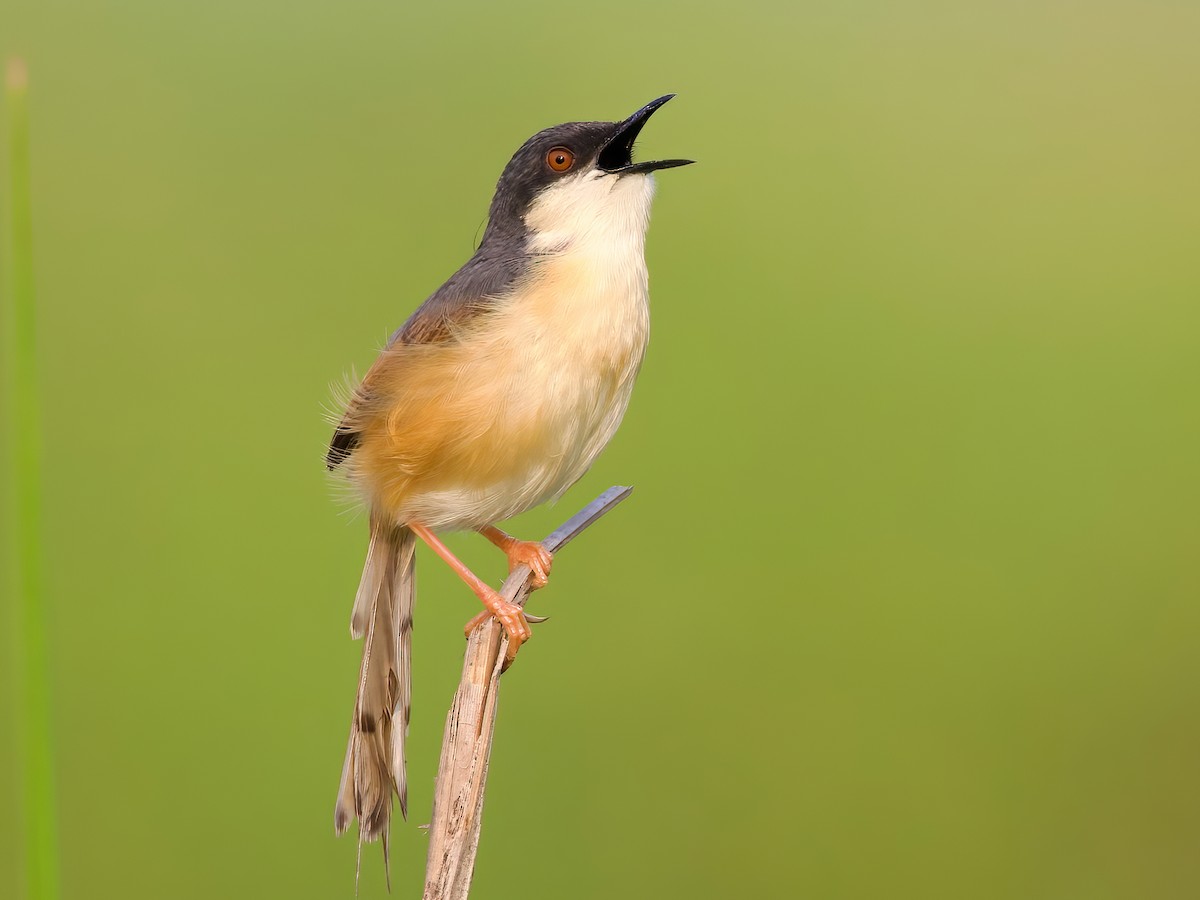 |
| The Ap is truly as noisy and chattering as this pic suggests |
Just look at how gorgeously fluffy it is!
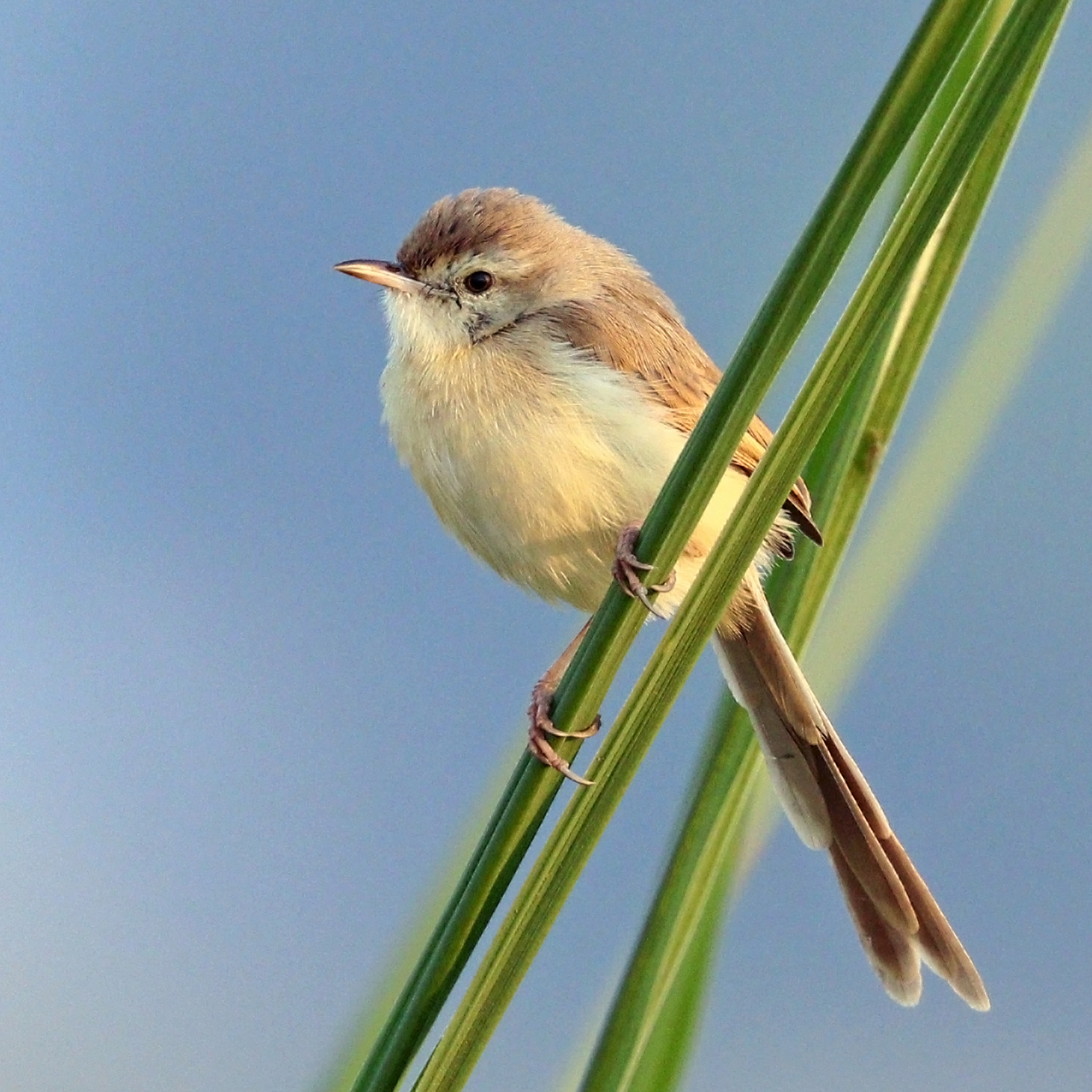 |
| You are NOT plain, my lovely... you are adorable, yes you are! |
Also saw LOTs of butterflies, many of which I have seen elsewhere in B'lore, but whose names I do not know. I must start learning about butterflies this year...
All in all, a great morning!
Images from eBird.. none are mine.
A deep breath, at long last
I haven't been birding by myself in a few months.... perhaps the last time was in Copenhagen, about 5 months ago. But that was in peak winter, and the pickings were far and few.
Birding is funny in some ways- depending on who I do it with, I feel differently about it. It is the most meditative, pleasurable and calming activity when I am by myself. I enjoy it when I am with Goose, my younger one. Goose doesn't care so much about birds, but she likes observing nature and staring at flowers and insects and how things interact with each other- she would any day like to observe a bird eating an insect than a bird sitting by itself somewhere.... she takes a Birds Eye view about birding, lol! In my mind, when I am with Goose, I am the person helping her appreciate things around her. It's a very conscious act and role that I take on, though I don't know if that's a good thing or not.
My older one, Ani, well, I haven't birded with him alone in a very long time, actually, never. It's almost always with others, either his cousins or with RK. He's an excellent intuitive birder, having been taught by RK almost from the time he was a toddler. But he tends to get bored by the same old birds (who doesn't?) and can be a bit lazy. He is at the stage where the diagnosis is all important, not the story.
Birding with RK, I have realised, is neither meditative nor calming. It's educational and energising. But at the end of it, I don't have the sense of deep connection with the earth or the sky or nature as I do when I am by myself. I think it's because of a sense of urgency that he instills in the process- there's no time to stand and stare. Or maybe he's really fast and gets impatient with plodders like me.
The opportunity to bird by myself comes occasionally, not too often. I like to plan it out- where to go, how, by when and so on. I research the birds I am likely to see by browsing through eBird the night before. Since I depend on public transport or my own two legs, I choose the places I go to very carefully. Twice or thrice, I have booked a cab to reach slightly out-of-the-way places, but these have never been by myself. I think there are two reasons for this: one is that I am careful- no matter how old a woman gets, traipsing by oneself is not wise. And the second is, I am not very comfortable splurging a few thousand rupees just for myself. I would much rather spend it when someone else is with me.
Once I reach the place, I am a meanderer. I don't like rushing about. I take deep breaths, trying to let go of my usual avatar, City Varsha, and to calm myself down. Invariably, there will be no birds seen in the first minutes, though their songs carry in the wind, and occasional glimpses of wings can be caught. This is mostly because Birder Varsha, the patient, observant, curious avatar hasn't yet fully come into being.
For me, birding is a way to give in to curiosity. I use my binos on a lot of things, even those that I know aren't birds. There will be strange-shaped leaves, the angle of light and shadows creates shapes that capture my attention, there will be nests of various types... I try comparing how things look through my glasses and what I imagine the thing to be, with what the clarity of binos reveal. At times, I collect seeds, leaves, and twigs because in that moment it seems unbearable that I can't take this world back with me. I have given up collecting flowers because they lose their magic so quickly, wilting and browning a few minutes in my little bag. Seeds are the best, because they retain the potential to hope. You can stare at them and imagine the tree they will grow to be, plant them and water them and pray that they sprout and that the sapling survives. There were a set of seeds that I brought back from the Forest Research Institute in Dehradun that are now sturdy little plants at home and I always hope that the other seeds I collect can be at least slightly successful. Most have not, but the hope remains.
I am neither an intuitive birder nor a very experienced one. It's like a language that you learn in adulthood, needing frequent laborious mental translations and references to dictionaries. I still get confused between birds that look kind of similar like robins and bush chats, still can't entirely tell which ones are the females. Raptors are the chapter I never got to in my studies. What I think I am decent at are small-ish birds that mostly hang out in trees or fly between grasses and trees. I say small-ish, because warblers are small and hang out in trees and I cannot figure them out at all.
The sign of a successful birding expedition is if I can see birds under my eyelids after I return home and sleep.
Monday, February 24, 2025
Normal
"Normal" is entirely subjective. It is person-dependent, society-dependent, culture-dependent and time-dependent.
What seems normal to us today (where to start.... homosexual relationships, divorces, premarital sex, women working, women in government! ... ) would have been extremely shocking at various points of time in history, and if all our texts are right, then in fact not so shocking if one were to go even further back in history.
We get so bogged down by what is normal, we get so scared about not appearing normal, and are so afraid of others telling us so, that we forget that the definition of normal is temporary.
RK has been spending the last 2 months in Udaipur and will be spending another 2-3 months there. He gets asked this question a lot: but why are you doing this? Isn't this abnormal? What about your wife and kids? Wouldn't this have an adverse effect on the children's emotional state?
To me, this actually feels a bit normal- growing up, my mom and I used to be one of the rare families that would accompany my dad to every city he ever got transferred to. Most other bank officials would leave their families in their home towns and basically spend years in various other cities, occasionally meeting up with wife and kids and parents. We were the abnormal ones at that time and I recall my parents constantly fielding questions about why they were ok with my changing schools every so often, and wouldn't this have an adverse impact on my emotional state and so on.
I think the things that feel right and give joy are the right choices to pursue. Obviously this will change from person to person, from family to family and from time to time. Then Everything is normal.
Tuesday, February 18, 2025
Remembering my dad
I've had the opportunity these past two days to spend a couple of hours at IITM. My father did his B.Tech and M.Tech there in the late 60s- early 70s.
For some reason, when I was doing my B.Tech in Anna Uni opposite IITM, neither he nor I thought about going to the IITM campus to see what he did and where and how things might have changed 30/35 years later. I never went to IITM by myself during those 4 years either.
He didn't tell me much about his years there (and I didn't ask... most teenagers/ early 20s new adults feel no great curiosity about their parents' lives and I think we have established over the course of this blog that I'm fairly self- absorbed).
Now that they are both in a different realm, I wonder a great deal about their early lives and the choices they made and wish I could have the opportunity for easy conversations that I have with my friends.
As I explored the campus, shrouded in a thin mist but not particularly cold, early today morning, I marveled at the giant banyans, the blackbucks and the white spotted deer. These trees must be a few hundred years old... my dad must have walked past them. Some buildings, including Chemical Engineering, his major, look to be the squat old buildings of the 70s..I wonder if he too, like so many students today, cycled back and forth between his hostel and dept, or if he preferred to walk, as he did in his later years.
He must have mentioned the name of his hostel at some point, especially during the single reunion he attended a year or so before his death, but in the long list of hostel names on the road signs, I couldn't recall it.
He had told me about how, for his M.Tech thesis, he had to use a computer, which in those days was as long as a room and would be housed across the main road in the Uni of Madras campus. He would use punch cards. It would take him a few hours to punch holes in the card in IITM, then he would go to Uni of Madras (would have to reserve the computer ahead of time), and then feed the punch card into the machine and return the next day for his computations.
Huh.
I also found out, the hard way, that the distance between his likely dept at IITM and the likely dept at Uni of Madras (where the computer must have been) is not exactly an easy walk... must have been at least 3km one way
My mom and grandmother had told me that he never actually wanted to become an engineer. He was interested in medicine. And my uncle, Sampath, who did Medicine actually wanted to be an engineer. Ani, who resembles my father a great deal in looks and personality, likes neither. He likes cooking and food. My father also used to like cooking. He would make the same elaborate plans for menus and ways of cooking that I see Ani make these days.
This rather unexpected trip made me reflect on my father's life and choices. It also underscored to me that while our kids may have very different preferences to us, there is still a familiarity to them. Ani's desires for his life may seem unusual on the surface, but weirdly makes me feel closer to my dad.
Subscribe to:
Posts (Atom)